
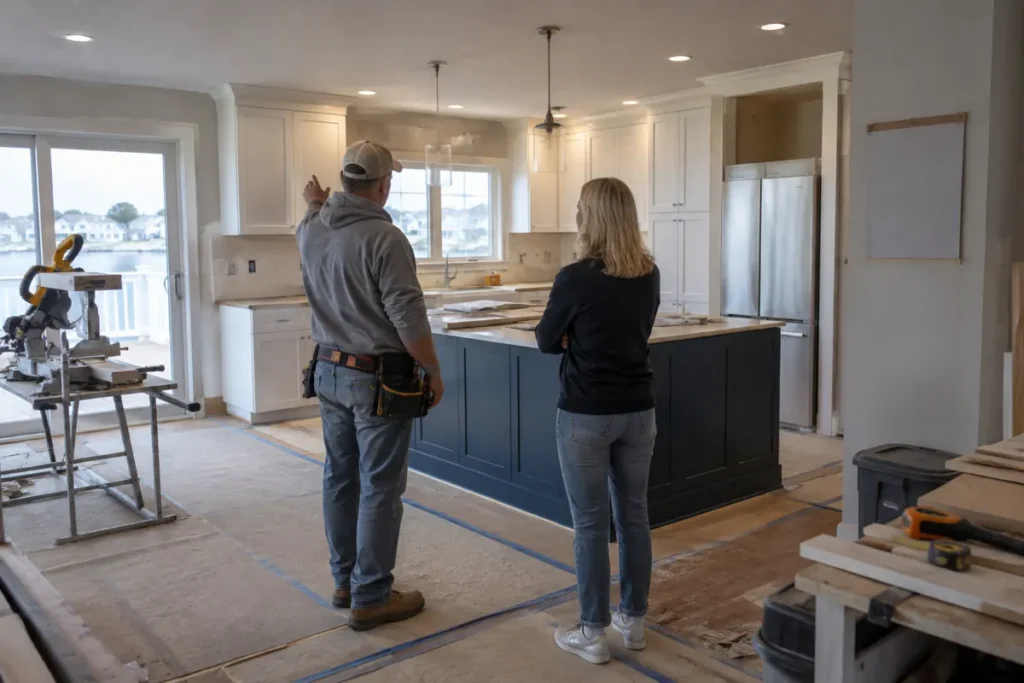
Quick answer: A home remodeling timeline can run from a few days or weeks for cosmetic updates to more than a year for major structural or whole-home projects, moving through consultation, design, permitting, construction, and a final walkthrough. Weather and permit review can add time for coastal New Jersey homes.
Key takeaways
- Angi estimates that cosmetic updates can take three days to three months, medium projects can take three weeks to six months, and major projects can take 12 to 15 months
- Most Ocean and Monmouth County towns require a construction permit for remodeling, additions, and window or door replacements that change size
- A clear project plan with milestones, material lead times, and communication checkpoints can help reduce schedule disruptions
- Shoreline Home Solutions follows a four-phase process: consultation and estimate, design and planning, skilled construction, and a final walkthrough
- Coastal weather windows and permit review timing in Ocean and Monmouth County should be built into any realistic schedule
How Long Does a Home Remodel Actually Take?
Remodeling timelines vary widely depending on scope, and homeowners are often surprised by how much a project’s size changes the schedule. According to Angi, simple cosmetic renovations such as flooring, painting, or deck additions typically take three days to three months, while medium projects like a full kitchen remodel or room addition run three weeks to six months. Major projects, including second-story additions or structural changes, often take 12 to 15 months.
These are national ranges, and local factors on the Jersey Shore add their own variables. Seasonal storms and permit review timing in towns across Ocean and Monmouth County can extend a schedule, while salt exposure may affect material and detailing decisions. A homeowner planning a kitchen remodel or a full home renovation should treat these ranges as a starting point, not a guarantee.
What Are the Main Phases of a Remodeling Project?
Most remodeling projects, regardless of size, move through the same general phases. Understanding each one helps homeowners know what to expect and when to expect it.
- Consultation and estimate. A contractor visits the property, discusses goals and budget, and provides a free estimate. This is also when red flags about structural or access issues usually surface.
- Design and planning. Layouts, materials, and finishes get finalized. This phase often includes permit applications, and review timing varies by municipality and project scope.
- Skilled construction. Demolition, framing, rough-in work, and finishing happen in sequence. This is usually the longest phase and the one most affected by material lead times and weather.
- Final walkthrough. The homeowner and contractor review completed work together, address any punch-list items, and confirm the project meets the agreed scope.
Shoreline Home Solutions describes its process in four steps—consultation and estimate, design and planning, skilled construction, and a final walkthrough—for services that include bathroom and whole-home remodeling. Keeping the phases consistent helps homeowners track progress and know what questions to ask at each stage.
What Determines How Long Your Remodel Will Take?
Several factors push a timeline longer or shorter, and most of them are things a homeowner can plan around if they know to ask about them early.
- Scope and structural changes. Moving walls, plumbing, or electrical adds inspection steps and labor time that cosmetic updates do not require.
- Permitting. New Jersey’s Uniform Construction Code, administered under the state Department of Community Affairs, governs building, electrical, plumbing, and energy requirements statewide, and permit requirements are administered locally, and work such as additions, interior alterations, or window and door replacements that change the existing opening may require permits.
- Material lead times. Custom cabinetry, specialty windows, and certain siding products can have longer order windows than standard stock items.
- Weather. Coastal storms and high winds can delay exterior work such as siding, roofing, or window installation, particularly in fall and winter months.
- Living arrangements. HomeAdvisor notes that larger projects sometimes require homeowners to live offsite temporarily, which affects both planning and the pace of work.
What Should a Project Plan or Schedule Include?
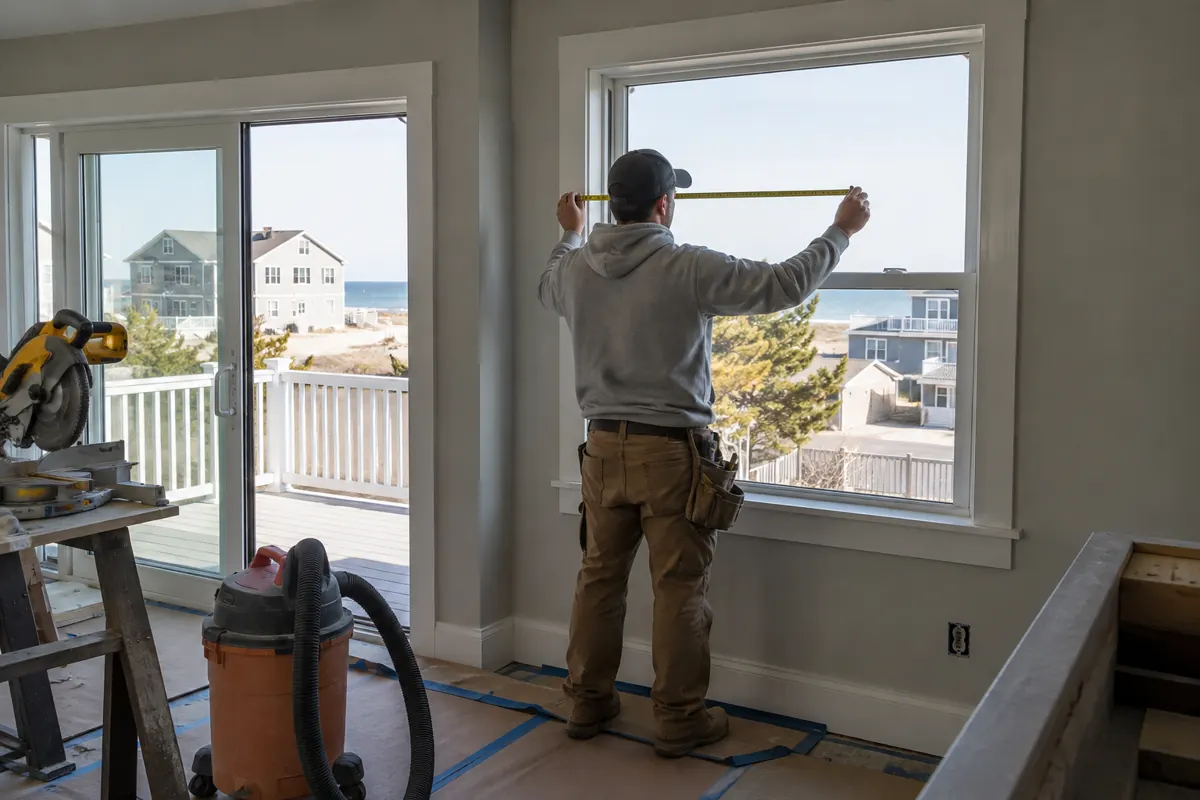
A written project plan protects both the homeowner and the contractor by setting clear expectations before work begins. At minimum, it should include a scope of work, a materials list with lead times, a payment schedule tied to milestones, and a point of contact for questions during construction.
| Plan Element | Why It Matters | Typical Timing |
|---|---|---|
| Scope of work document | Defines exactly what is and is not included, reducing disputes later | Finalized during design and planning phase |
| Permit application | Required for most structural, electrical, plumbing, and exterior opening changes under NJ construction code | Submitted before construction begins; review time varies by municipality |
| Material order and lead times | Custom items like cabinetry or specialty glass can hold up a schedule if ordered late | Placed as soon as selections are finalized |
| Milestone payment schedule | Ties payments to completed work stages rather than a single lump sum | Set in the signed contract |
| Communication checkpoints | Keeps homeowners informed of progress and any changes to scope or schedule | Ongoing throughout construction |
How Do Permits and Inspections Affect the Schedule?
Permits are one of the most underestimated parts of a remodeling timeline. In New Jersey, construction codes are adopted statewide through the Department of Community Affairs, covering building, plumbing, electrical, energy, and mechanical work. Local townships, such as Ocean Township’s construction department, require permits for a long list of projects including additions, siding and roofing, window and door replacements that differ from the existing unit, remodeling interiors, and HVAC or electrical upgrades.
Ordinary maintenance, like painting or straightforward fixture swaps, typically does not require a permit, but most remodeling work does. Homeowners should ask their contractor early which permits a project needs and build the review time into the overall schedule, since turnaround varies by town and by season.
What Causes Remodeling Timelines to Slip?
Even well-planned projects can run long. Common causes of remodeling delays include:
- Change orders added mid-project, which require re-pricing and sometimes re-sequencing of work.
- Delayed material shipments, especially for custom orders.
- Weather delays affecting exterior work like siding, gutters, or window installation.
- Permit revisions requested by the local construction office.
- Unexpected conditions found during demolition, such as water damage or outdated wiring.
Including a reasonable schedule contingency, particularly for exterior and coastal remodeling work, can help homeowners plan for these issues.
How Should Homeowners Plan Around Milestones and Communication?
Clear communication at each milestone keeps a project on track and gives homeowners confidence even when a schedule shifts. A good practice is to confirm, in writing, what triggers each payment, who to contact with questions, and how often updates will be shared during active construction.
According to Better Homes & Gardens, homeowners often set renovation deadlines around events like holidays or the start of a summer rental season, which can be especially relevant along the Jersey Shore. Starting the planning conversation well before a target date leaves more time for design decisions, permitting, and material orders without unnecessarily compressing the construction phase.
Which Projects Typically Take Longer in Ocean and Monmouth County?
Scope size is the biggest driver of timeline, but coastal conditions add their own layer. Exterior projects like siding, gutters, and trim work are more exposed to wind and storm delays than interior work, and door and window replacements on oceanfront or bayfront properties sometimes require additional weatherproofing details.
Homeowners considering a home addition or room extension should expect a longer timeline than a single-room remodel, since additions typically involve structural engineering, permitting, and multiple inspection stages. For budget planning alongside scheduling, our guide to remodeling costs and financing covers the cost side of these same project phases.
Shoreline Home Solutions works across 24 towns in Ocean and Monmouth County, including Toms River, Brick, Point Pleasant, Lakewood, Howell, and Middletown, and the same four-phase process applies whether the project is a kitchen, bathroom, exterior upgrade, or full home renovation. You can see examples of completed work in our project gallery.
Frequently Asked Questions
How far in advance should I start planning a remodel?
Better Homes & Gardens recommends beginning planning early, especially when a project requires permits, custom materials, or structural changes. Earlier planning gives time for design decisions, estimates, and material lead times without compressing the construction schedule.
Do I need a permit for a kitchen or bathroom remodel in New Jersey?
In most New Jersey municipalities, yes, if the work involves plumbing, electrical, or structural changes beyond simple fixture replacement. Local construction offices, like Ocean Township’s, specifically list interior remodeling and alterations among the projects that require a permit before work begins.
Can weather really delay a remodeling project on the Jersey Shore?
Yes, especially for exterior work such as siding, roofing, and window or door installation. High winds, coastal storms, and heavy rain can postpone exterior work, so the project plan should allow reasonable flexibility for weather delays.
What is the difference between a cosmetic renovation and a medium or major remodel timeline?
Angi classifies cosmetic renovations, like painting or flooring, as taking three days to three months with no structural work. Medium projects, such as a full kitchen remodel or room addition, run three weeks to six months, while major projects like a second-story addition can take 12 to 15 months.
Who should I contact if my project schedule starts slipping?
Your contractor should have a designated point of contact for schedule questions, outlined in your project plan. Regular milestone check-ins make it easier to catch and address delays early, whether they come from permitting, materials, or weather, before they compound into bigger setbacks.
Sources
- New Jersey Department of Community Affairs | Current Construction Codes
- The Official Website of The Township of Ocean, NJ – Construction
- How Long Does It Take to Renovate a House? | Angi
- 2026 Home Remodeling & Addition Costs | HomeAdvisor
- Here’s How to Plan a Renovation Timeline | Better Homes & Gardens
Ready to Start Your Remodeling Project
Shoreline Home Solutions is a licensed and insured remodeling contractor serving homeowners and businesses across Ocean and Monmouth County, New Jersey. Call us at 860-481-2908 or visit our contact page to request a free estimate for your kitchen, bathroom, exterior, or whole-home remodel.
Written by the team at Shoreline Home Solutions, a licensed and insured home remodeling contractor serving Ocean and Monmouth County, New Jersey.