
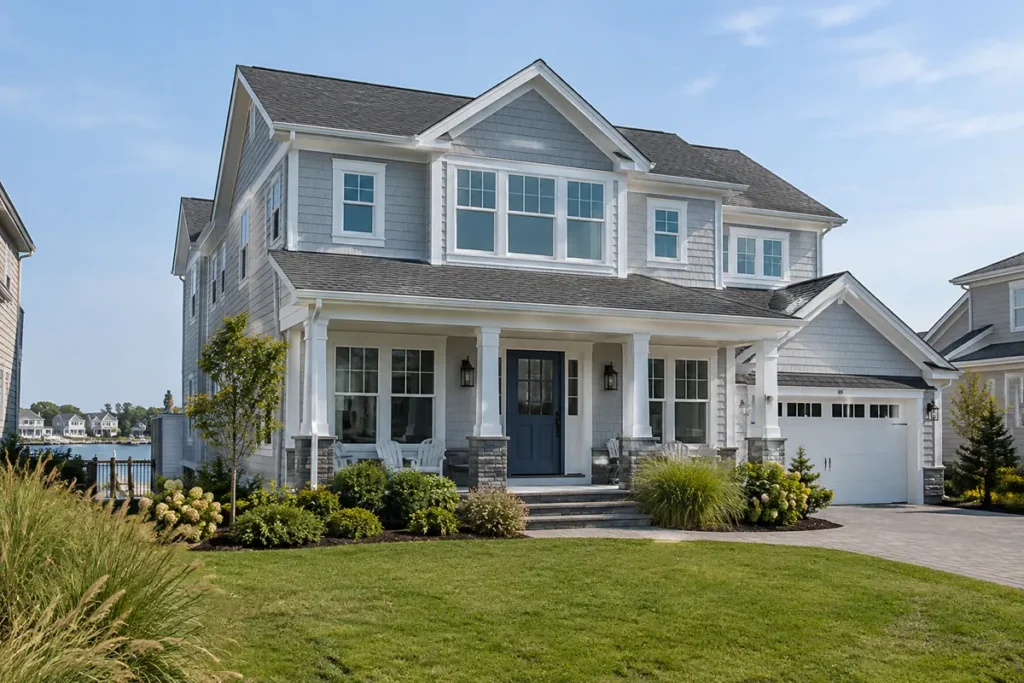
Quick answer: Coastal remodeling in Ocean and Monmouth County means choosing materials and construction details built for salt air, high wind, and storm exposure, not just curb appeal. Durable siding, impact-rated windows and doors, properly flashed roofing, and code-compliant construction reduce long-term maintenance and storm damage, protecting your investment near the shore.
Key takeaways
- Nearly two-thirds of New Jersey’s coastline faces high or very high erosion risk, according to the NJ Department of Environmental Protection, which is why durable materials matter more here than inland.
- Impact-rated windows cost roughly 20 to 40 percent more than standard windows, according to Consumer Reports, but offer passive protection without last-minute storm prep.
- New Jersey’s listed 2024 code updates take effect August 17, 2026; projects should be designed to the code in force when permits are filed, with local wind and snow criteria confirmed for the site.
- Fiber cement, PVC trim, and impact-rated glazing can suit coastal applications, but performance depends on the product rating, fasteners, installation details, exposure, and maintenance.
- A coordinated approach to siding, windows, doors, and roofing performs better against wind-driven rain than upgrading one component at a time.
What Makes Coastal Remodeling Different From Inland Projects
Homes along the Jersey Shore face a combination of stresses that inland properties rarely see at the same intensity: salt-laden air that accelerates corrosion, sustained wind loads, wind-driven rain, and the occasional nor’easter or tropical system that tests every seam in a building envelope. Standard residential materials and details often fall short here, which is why coastal remodeling calls for a different set of priorities.
According to the New Jersey Department of Environmental Protection, nearly two-thirds of the state’s coastline is at high or very high risk of coastal erosion, and 98% of the coastline is projected at medium or very high risk from sea-level rise. That reality shapes how we think about exterior materials, drainage, and structural details on every remodeling project in Ocean and Monmouth County.
This guide focuses specifically on weatherproofing and storm-resistant design choices. For a broader look at curb appeal and general exterior upgrades, see our exterior remodeling services page.
Who Needs Storm-Resistant Remodeling Most
Not every home needs the same level of hardening, but certain situations raise the stakes. Properties in flood-prone zones, homes within a block or two of the water, older construction built before current energy and wind-load codes, and investment or rental properties that need to stay rentable after storms all benefit most from a deliberate weatherproofing strategy.
- Older homes with original single-pane windows or wood siding showing salt damage
- Properties near Barnegat Bay, the Manasquan River, or the open ocean that take direct wind exposure
- Second homes and rentals where owners cannot respond quickly before a storm
- Commercial buildings with large glass storefronts that need impact protection
We work with homeowners and business owners across both counties, including Toms River, Brick, Point Pleasant, Lakewood, Barnegat, Stafford, Lacey, and Seaside Heights in Ocean County, and Howell, Wall, Manasquan, Brielle, Belmar, and Middletown in Monmouth County. See our full list of towns we serve for the complete coverage area.
Which Siding and Exterior Materials Hold Up Best Near the Water
Salt air corrodes metal fasteners, degrades paint finishes, and accelerates rot in untreated wood. Material choice is the single biggest factor in how often an exterior needs repair or replacement.
Common Options Compared
| Material | Salt Air Performance | Maintenance | Warning Signs |
|---|---|---|---|
| Fiber cement siding | Strong resistance to moisture and insects, holds paint well | Repaint as required by the coating manufacturer and exposure conditions | Cracked boards, open joints, peeling coating, or moisture staining |
| Vinyl siding | Decent but can fade or warp in intense sun and heat | Occasional cleaning, no painting needed | Warping, cracking, loose panels, fading, or gaps at seams |
| Wood siding (untreated) | Prone to rot and salt damage without regular sealing | Frequent sealing and repainting | Soft spots, peeling paint, split boards, mildew, or insect damage |
| PVC trim boards | Does not rot or absorb moisture | Minimal, occasional cleaning | Loose joints, movement at fasteners, cracking, or heat distortion |
Use fasteners approved by the cladding manufacturer and suitable for the property’s corrosion exposure; inappropriate fasteners may corrode and stain the exterior. We cover material selection and gutter details in depth through our exterior remodeling services.
How Impact Windows and Doors Reduce Storm Damage
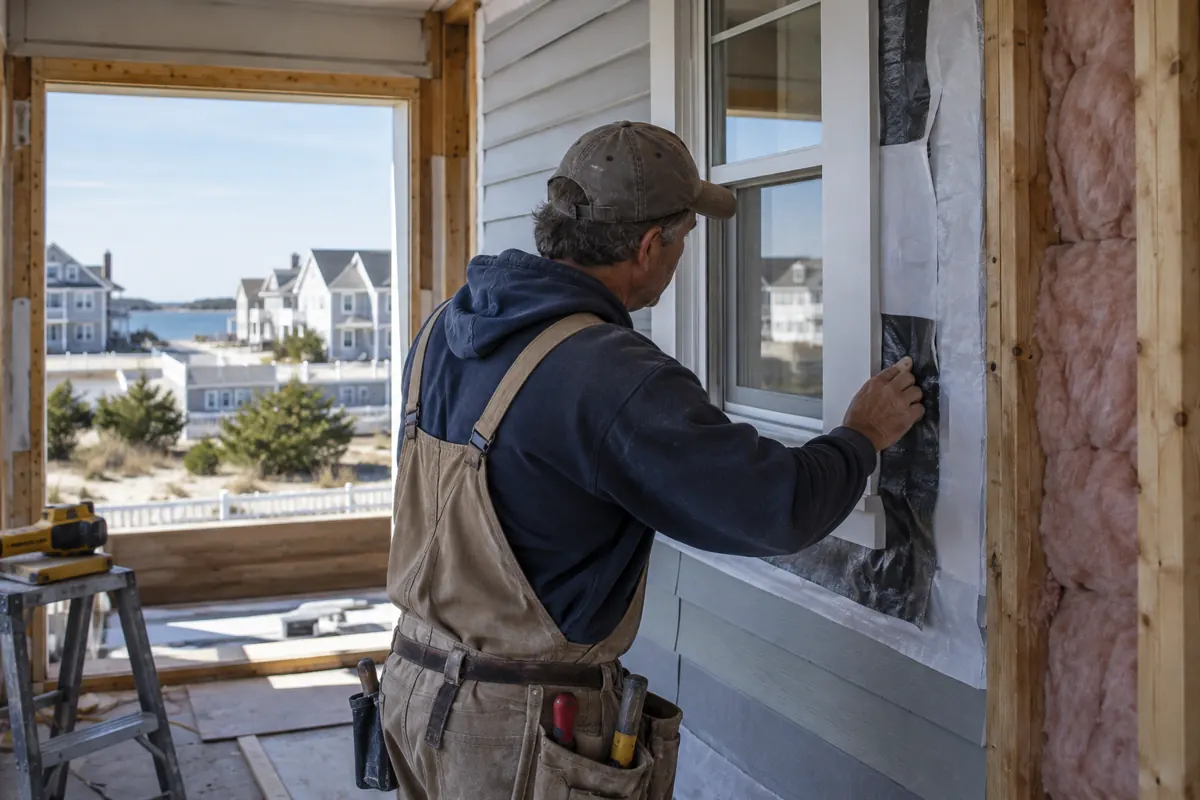
Windows and doors are usually the weakest points in a home’s storm defense. Once wind-driven rain or debris breaches a window, water intrusion and pressure changes can cause damage well beyond the opening itself.
According to Consumer Reports, impact-resistant storm windows are engineered as complete structural units, built around laminated glass that holds together even when shattered, unlike standard double-pane units. Consumer Reports also notes that impact-rated windows typically cost roughly 20 to 40 percent more than standard replacement windows, though sliding glass doors and large fixed panes add further cost. That premium often pays off through reduced storm damage risk and, in some cases, insurance discounts, though savings vary by insurer.
Impact Windows vs. Hurricane Shutters
- Impact windows: Permanent protection, no setup required before a storm, higher upfront cost
- Hurricane shutters: Lower upfront cost, but must be installed or closed before every storm
For homes and businesses with large glass areas, our commercial glass services cover storefronts, curtain walls, and skylights that may require project-specific wind, water, and impact-resistance considerations. Full replacement details are covered on our doors and windows replacement page.
What Roofing and Flashing Details Matter Most in High Wind
Roofing failures during coastal storms rarely start with the shingles themselves; they usually start at the flashing, edges, and penetrations where water finds a path inward. A remodeling project that upgrades siding and windows but ignores roof detailing leaves an obvious gap in protection.
- Confirm that the roof deck and fasteners meet the code in force for the site. New Jersey’s listed 2024 code updates reference ASCE 7-22 and take effect August 17, 2026; the state notes that the standard generally increased snow loads, while applicable wind criteria must be determined for the property.
- Check that flashing around chimneys, skylights, and roof-to-wall transitions is sealed and correctly layered, not just caulked.
- Verify gutters and downspouts direct water away from the foundation, especially on homes close to grade or near flood zones.
- Ask whether ridge vents and soffit vents are properly balanced to avoid moisture buildup in the attic.
Because these details work together, we recommend evaluating siding, windows, and roofing as one connected system rather than tackling them in isolation. See completed examples of this coordinated approach in our completed remodeling projects.
How Energy Efficiency Fits Into Storm-Resistant Remodeling
Weatherproofing and energy efficiency overlap more than most homeowners expect. A tighter building envelope that keeps wind-driven rain out also keeps conditioned air in, which lowers heating and cooling costs.
The New Jersey Department of Community Affairs lists the 2024 International Energy Conservation Code for low-rise residential construction with an August 17, 2026 adoption date. For alterations to an existing home, applicable energy and rehabilitation requirements depend on the scope of work and the code in force when permits are filed, so confirm them with the local code official.
Practical steps that support both goals include continuous exterior insulation under new siding, properly flashed and insulated window and door openings, and sealing gaps around penetrations like vents and electrical fixtures. These are the same details that keep salt air and moisture out, so there is little reason to treat energy upgrades and storm-hardening as separate projects.
What to Expect During a Coastal Remodeling Project
Coastal remodeling projects generally follow the same phases as any major renovation, but each stage has shore-specific considerations worth asking about upfront.
- Consultation and estimate: Walk the exterior with a contractor who understands local wind and flood exposure, not just general remodeling.
- Design and planning: Confirm material choices account for salt air and that window and door selections meet current wind-load and energy code requirements.
- Skilled construction: Verify fasteners, flashing, and sealants are rated for coastal use, since substitutions here are hard to spot after the fact.
- Final walkthrough: Review warranty coverage on exterior work and confirm maintenance expectations for the materials installed.
Shoreline Home Solutions follows this consultation, design, construction, and walkthrough process on every project, and exterior work is backed by dependable warranties as described on our site. If your project also involves changing room layouts or adding square footage, our Whole-Home Remodeling Planning Guide and Guide to Home Additions & Room Extensions in Ocean County cover those considerations in more depth.
When to Call a Licensed Contractor vs. DIY
Some weatherproofing tasks are reasonable for a handy homeowner: caulking small gaps, cleaning gutters, touching up paint on wood trim, or resealing minor cracks in stucco. These are maintenance items, not structural fixes, and they are worth doing regularly regardless of who handles the larger project.
Structural work, however, belongs with a licensed professional. Work that alters structural elements generally requires permits and code compliance under New Jersey’s Uniform Construction Code, while permit requirements for window, door, siding, and roof work depend on the exact scope. Confirm requirements with the local enforcing agency before work begins. Getting these details wrong does not just risk storm damage; it can also void manufacturer warranties and complicate insurance claims later.
Shoreline Home Solutions is a licensed and insured remodeling contractor serving 24 towns across Ocean and Monmouth County, and we offer a free estimate for homeowners and business owners weighing a coastal remodeling project. Reach out through our contact our remodeling team page, or learn more about our background on our about Shoreline Home Solutions page.
Frequently Asked Questions
How much more does storm-resistant remodeling cost compared to standard remodeling?
It depends on scope, but impact-rated windows typically run 20 to 40 percent more than standard windows, according to Consumer Reports. Siding, roofing, and flashing upgrades add additional cost beyond basic materials. Get a detailed, itemized estimate so you can see exactly which upgrades drive the price difference.
Does impact-resistant remodeling actually lower my homeowners insurance?
Possibly, though it depends on your insurer and location. Consumer Reports notes that discounts for impact-resistant windows are common in hurricane-prone regions but vary by company. Ask your insurance provider directly whether specific upgrades, like impact windows or reinforced roofing, qualify for a premium reduction.
Do I need a permit to replace siding or windows on a coastal NJ home?
Permit requirements for siding, window, and door replacement in New Jersey depend on the scope, including whether structural changes are involved. Confirm the project classification and required permits with the local enforcing agency before work begins.
How is coastal remodeling different from just building a new beach house?
Remodeling improves an existing structure, while new construction creates a new building and follows a different design, approval, and construction process. The better path depends on the existing home’s condition, project goals, site constraints, and budget.
Can I weatherproof just the windows and doors without touching the siding?
Yes, this is a common and reasonable first step, especially on a budget. However, windows and doors perform best as part of a coordinated building envelope, so plan to address flashing and siding transitions around new openings even if the full exterior isn’t replaced at the same time.
Sources
- NJDEP | Resilient Environments and Landscapes Overview
- New Jersey Department of Community Affairs | Current Construction Codes
- 3 Best Storm Windows of 2026, Lab-Tested and Reviewed – Consumer Reports
Ready to Start Your Remodeling Project
Shoreline Home Solutions is a licensed and insured remodeling contractor serving homeowners and businesses across Ocean and Monmouth County, New Jersey. Call us at 860-481-2908 or visit our contact page to request a free estimate for your kitchen, bathroom, exterior, or whole-home remodel.
Written by the team at Shoreline Home Solutions, a licensed and insured home remodeling contractor serving Ocean and Monmouth County, New Jersey.